Fully electric

Autonomous Ora 1

Autonomous Driving

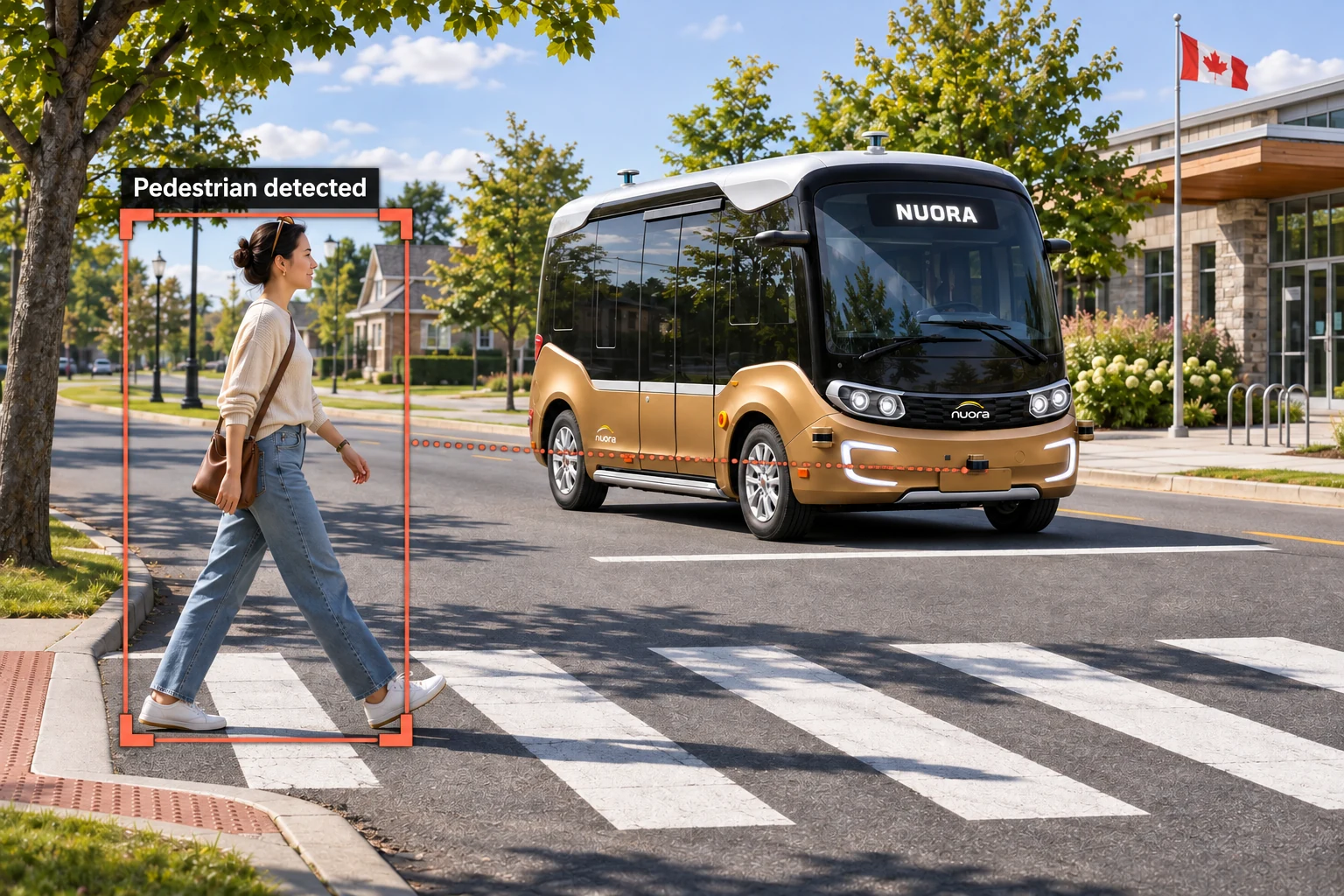
A camera tracking box labelled “Pedestrian detected” highlights the person crossing in front of the gold Ora 1.

How Ora 1 reads the road

On permitted roads and in closed or geofenced areas, Ora 1 can drive at SAE Level 4. Lidar, radar and cameras help it recognise traffic lights, detect pedestrians and stop for passengers along its route.

How the driver takes control

Touching the steering wheel switches Ora 1 from autonomous driving to manual control.

Meet the Ora 1

Explore the low-floor cabin, passenger displays and technology behind each journey.

Autonomous capability
SAE Level 4
Maximum capacity
Up to 24 passengers
Driving range
Up to 150 km
Overall length
6,045 mm

The 150 km range was demonstrated on a full charge during road testing.

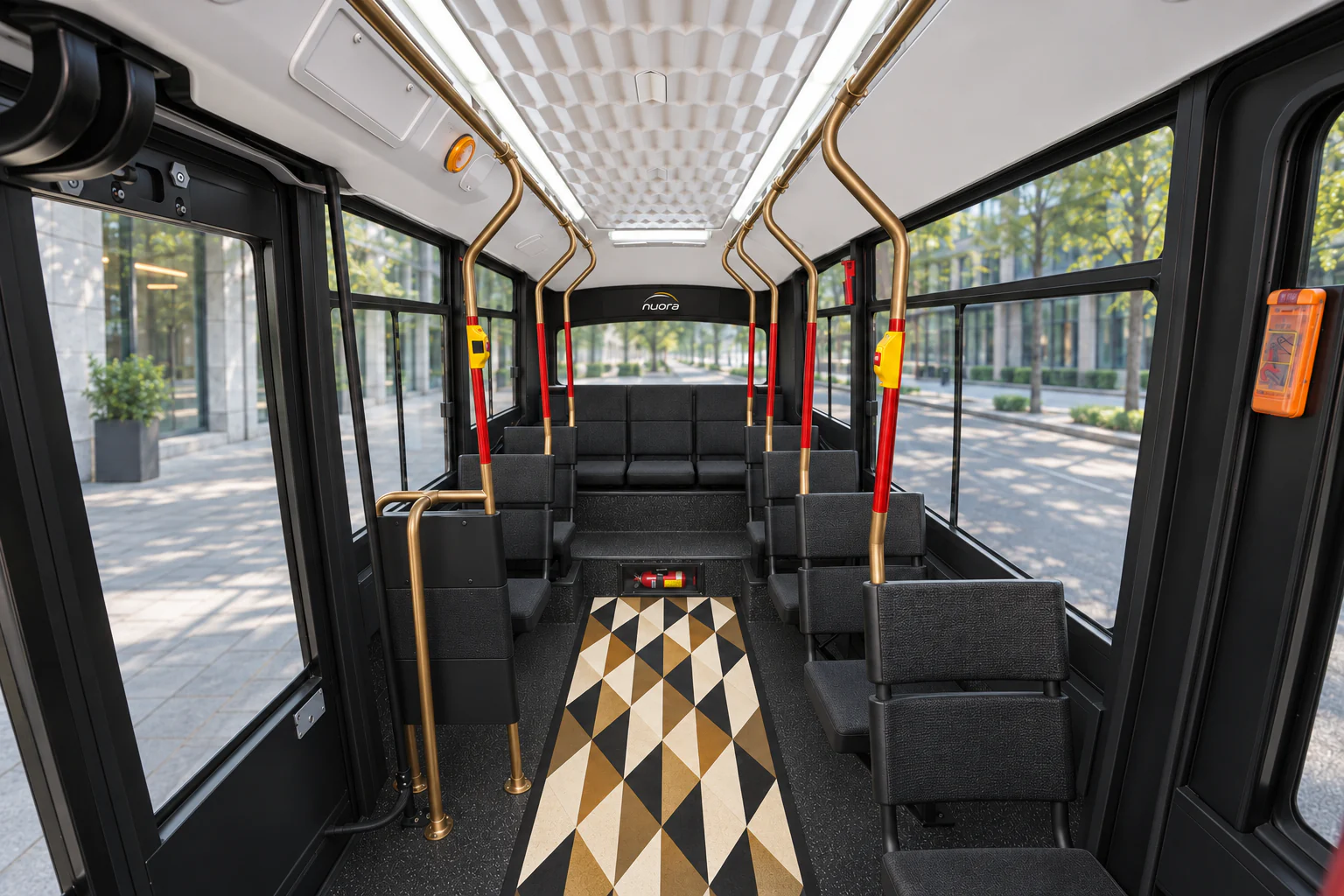
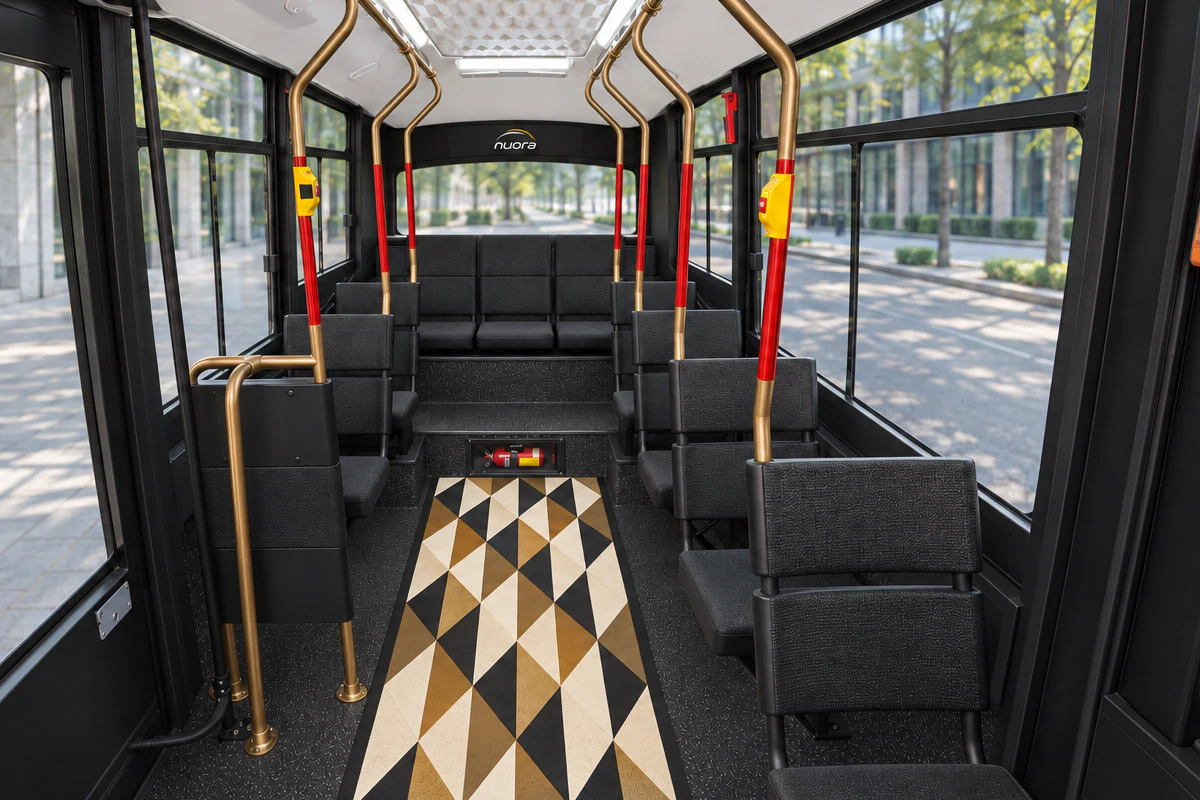
Black passenger seats line the patterned aisle, with gold handrails leading to the raised rear seats.

Passenger seating

Explore Passenger seating

Passenger seating

The standard cabin has a 9+1 seat layout and carries up to 24 passengers in total.

Seating options
9+1 seats as standard. Alternative layouts include 10–14 seats, with up to 19 passengers in the 14-seat version.
Windows
Large panoramic side windows
Enquire about this bus
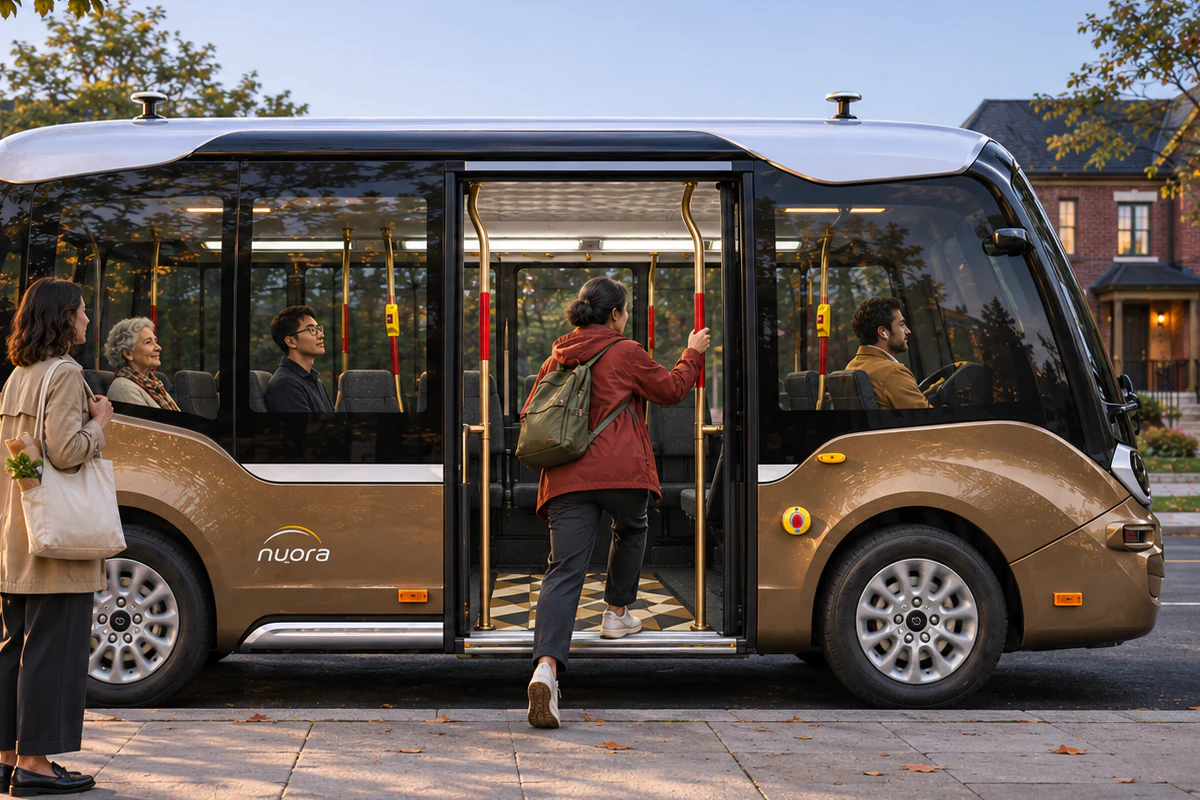
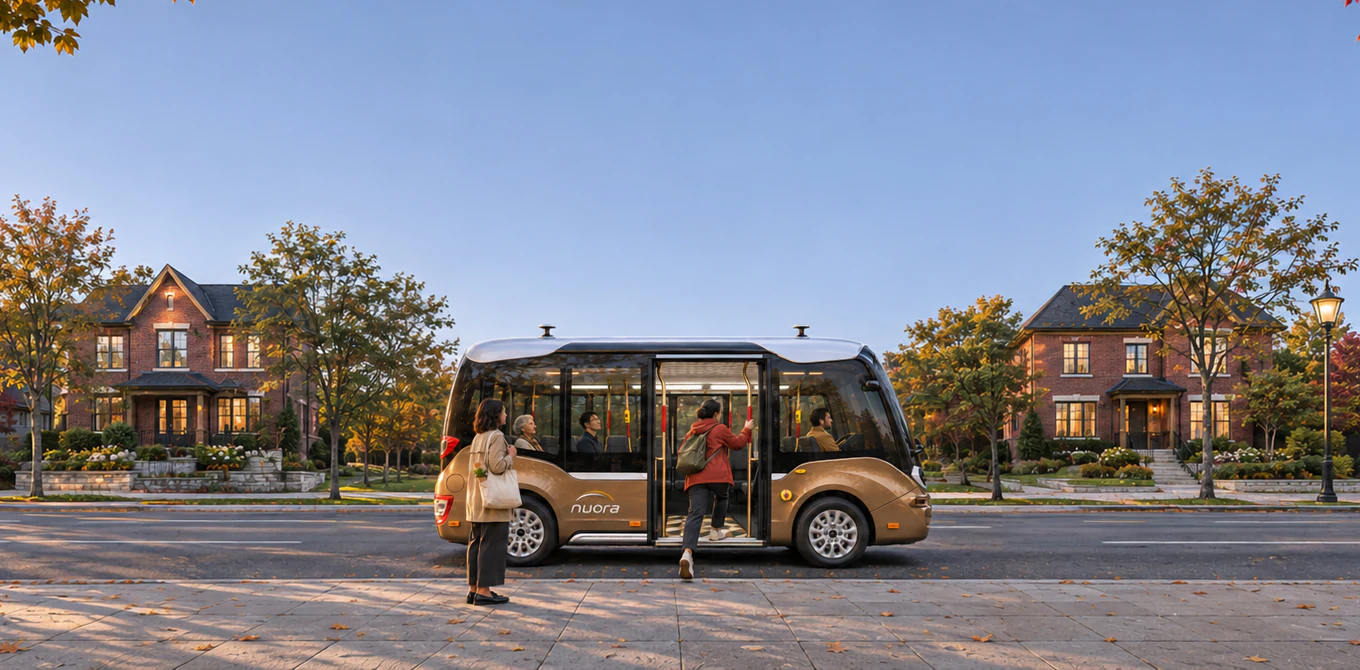
A passenger steps across the low threshold into the open centre doorway of the gold Ora 1.

Low-floor boarding

Explore Low-floor boarding

Low-floor boarding

An electric sliding door opens to a 1.1 m clear entrance. The battery sits within the chassis, leaving a low floor throughout the cabin.

Passenger door
Electric sliding plug door with a 1.1 m clear opening.
Cabin floor
100% low floor.
Enquire about this bus
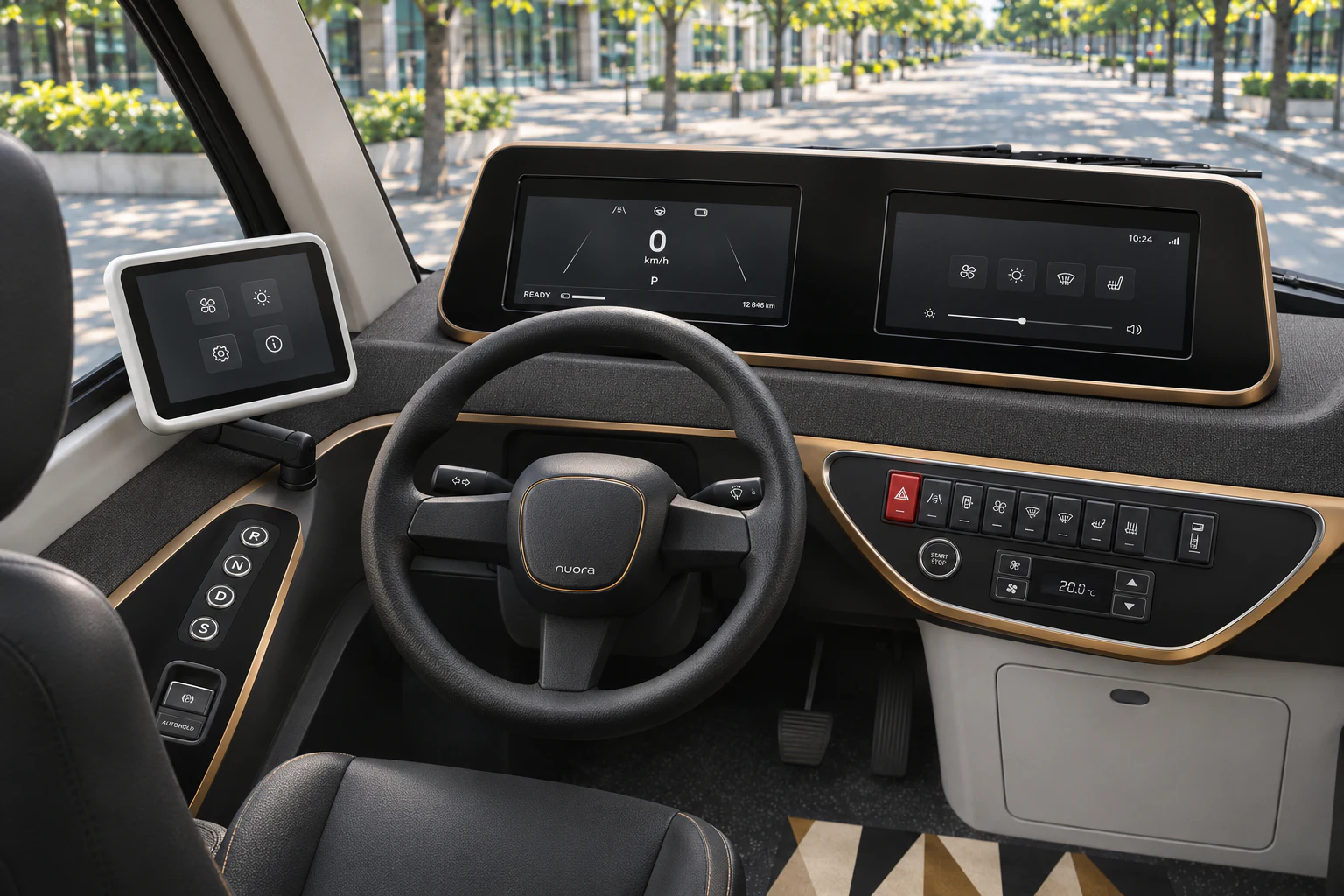
The steering wheel faces twin dashboard displays, with an auxiliary touchscreen to the left and physical controls to the right.

Manual driving controls

Explore Manual driving controls

Manual driving controls

The driver can switch from autonomous operation to manual driving by touching the steering wheel.

Operating modes
Autonomous and manual, with a dual-direction, dual-control cab.
Enquire about this bus
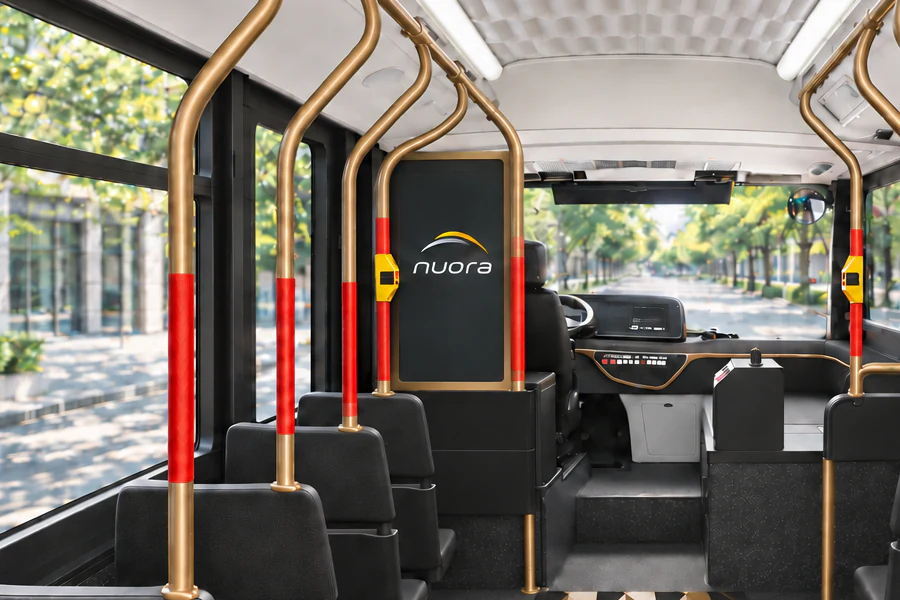
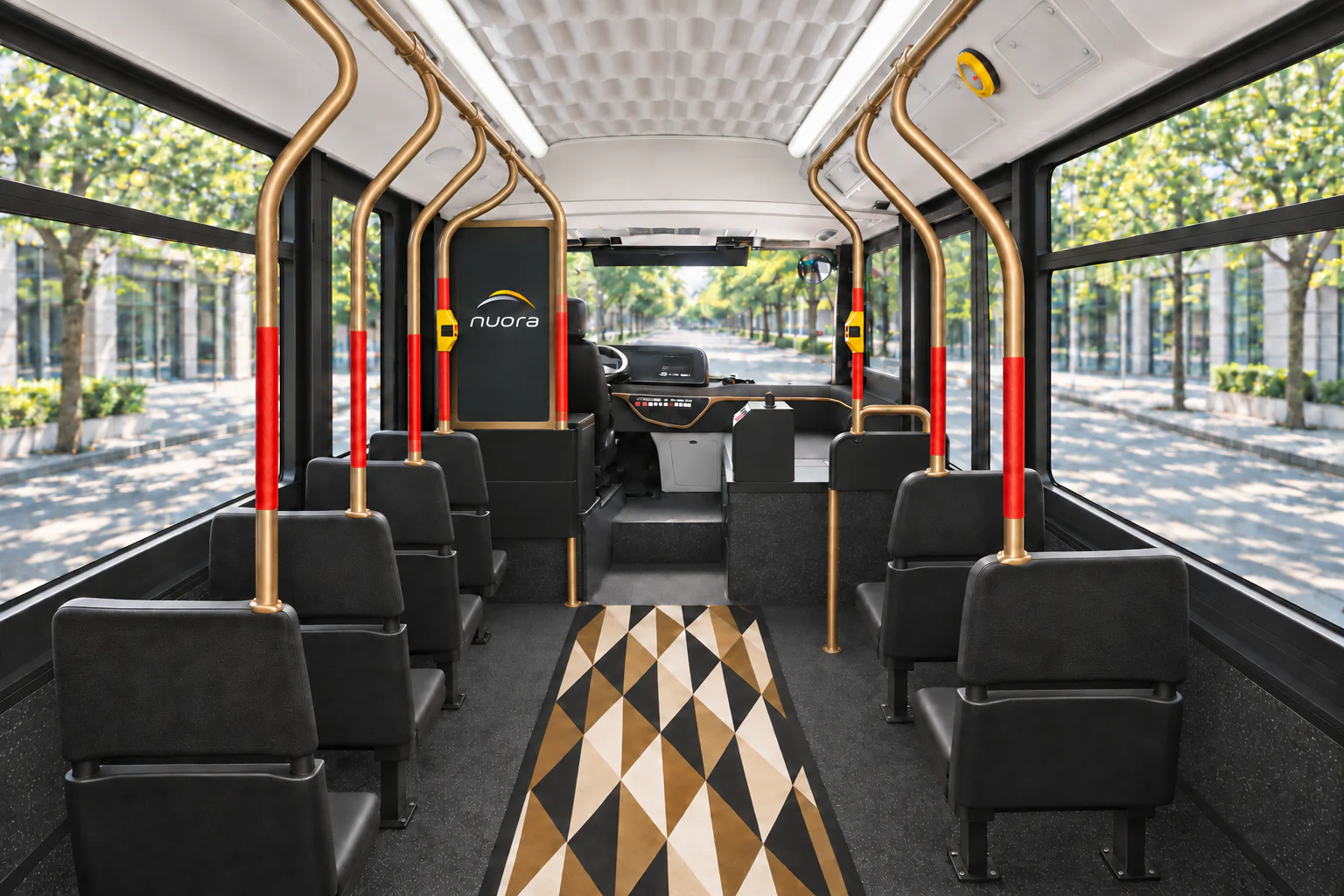
The upright Nuora passenger screen sits in its gold frame just behind the driver, facing the cabin.

Passenger information

Explore Passenger information

Passenger information

A 32-inch LCD display brings journey information into the cabin. Panoramic side windows give passengers a view of the route.

Passenger information
32-inch LCD kiosk; real-time information screens
Windows
Large panoramic side windows
Enquire about this bus
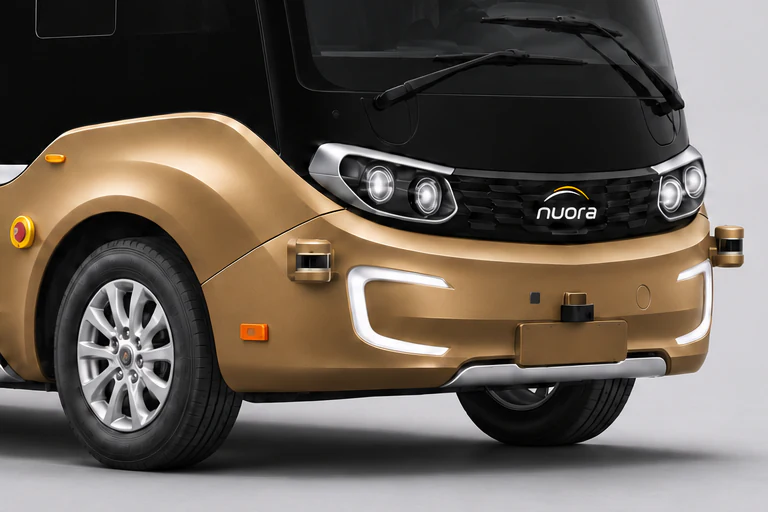
Close view of the Ora 1’s front-corner sensor, near the round headlamps and the gold bumper.

Road sensing

Explore Road sensing

Road sensing

Lidar, radar and cameras help Ora 1 recognise traffic lights and detect road users and obstacles. The driving system combines their readings to plan a path along a permitted route.

Sensor equipment
Lidar, millimetre-wave radar, HDR cameras and GPS antennas.
Road users and signals
Pedestrian detection, obstacle avoidance and traffic-light recognition.
Enquire about this bus
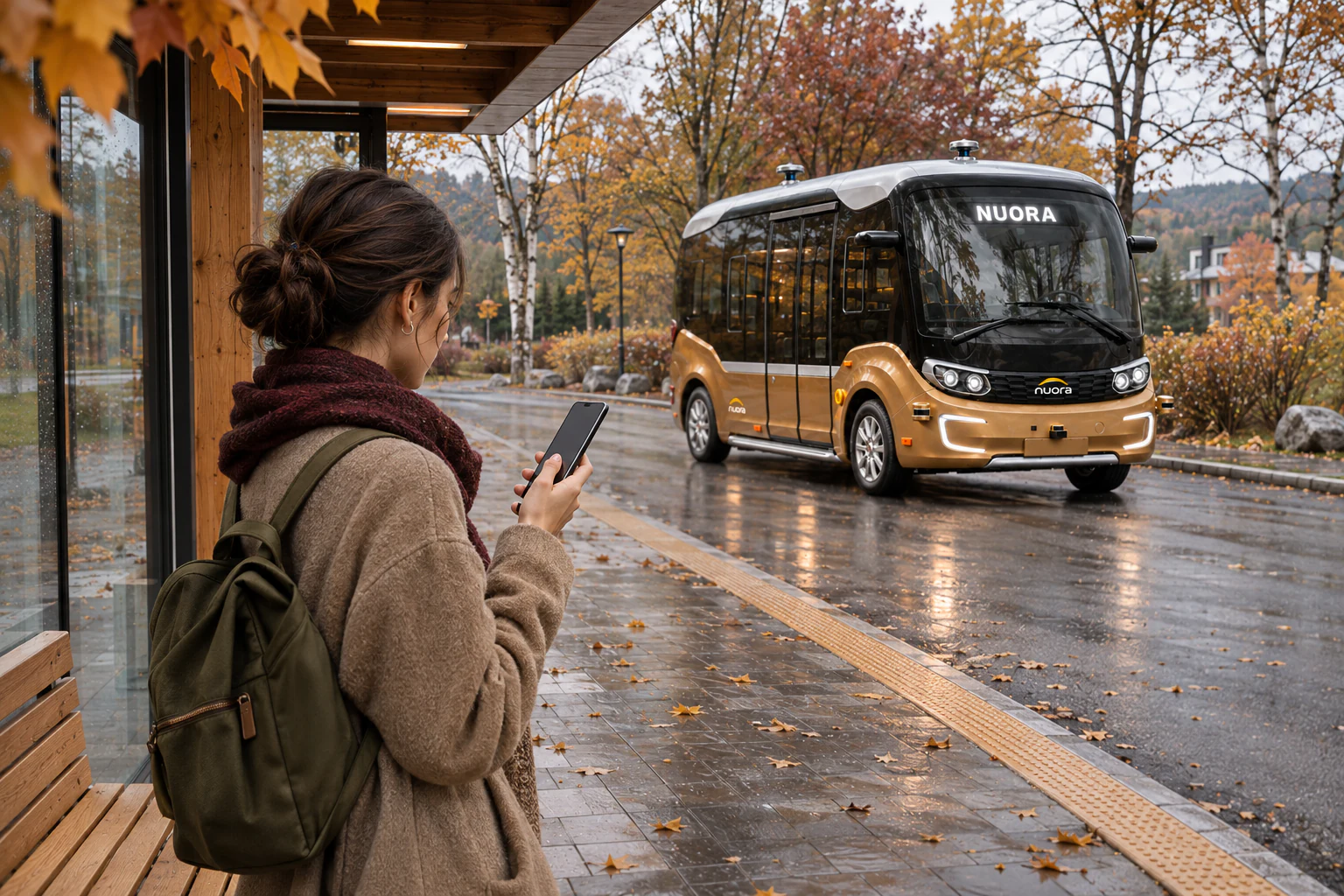
A rider checks her phone at a neighbourhood transit shelter as the gold Ora 1 approaches.

Connected journeys

Explore Connected journeys

Connected journeys

Passengers can request a trip by smartphone. The dispatch system uses demand patterns to plan routes for on-demand service.

Fleet connectivity
5G vehicle network.
V2V communication
Vehicle-to-vehicle communication supported
Booking
Smartphone app trip booking for on-demand service
Enquire about this bus

EXTERIOR DESIGN

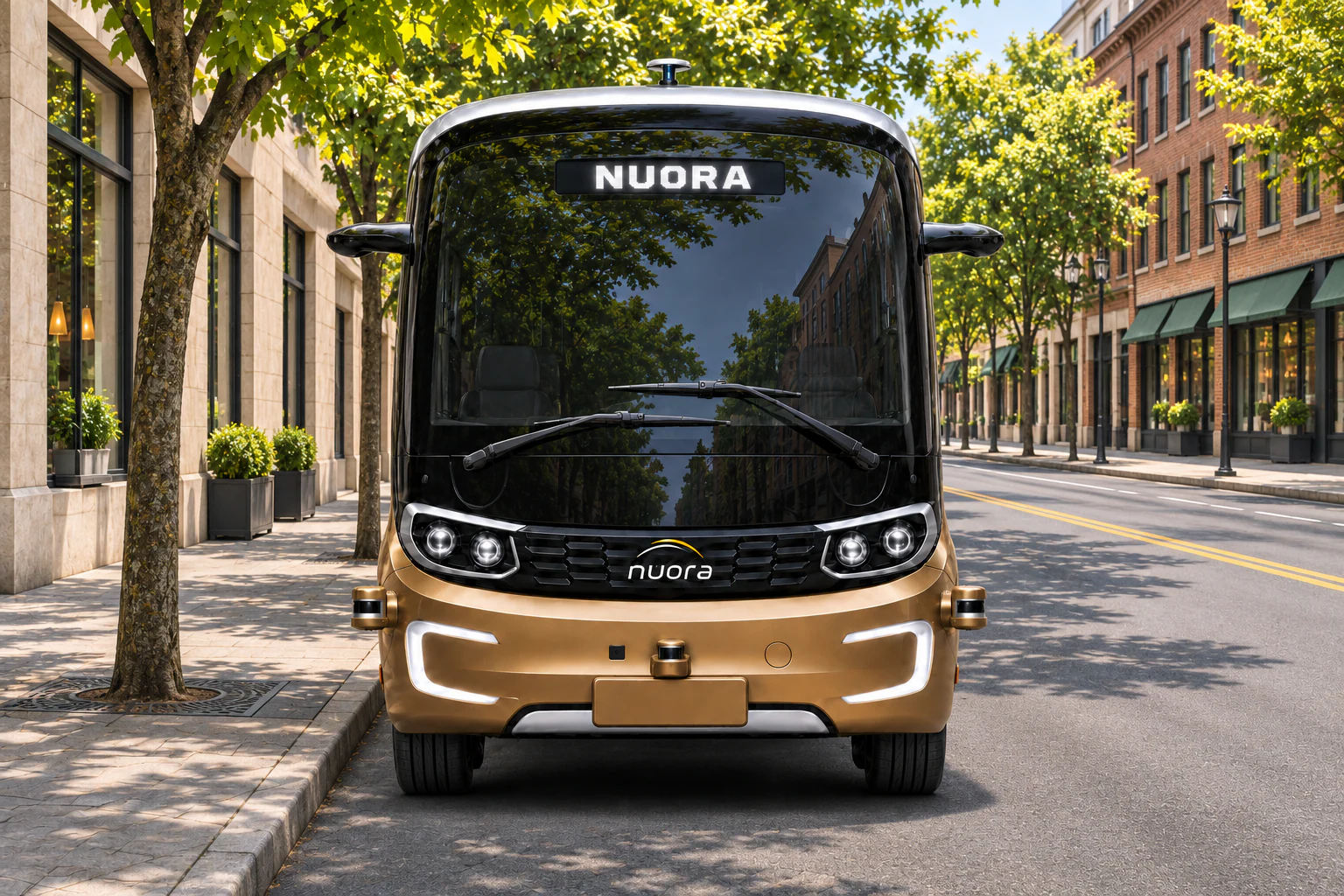
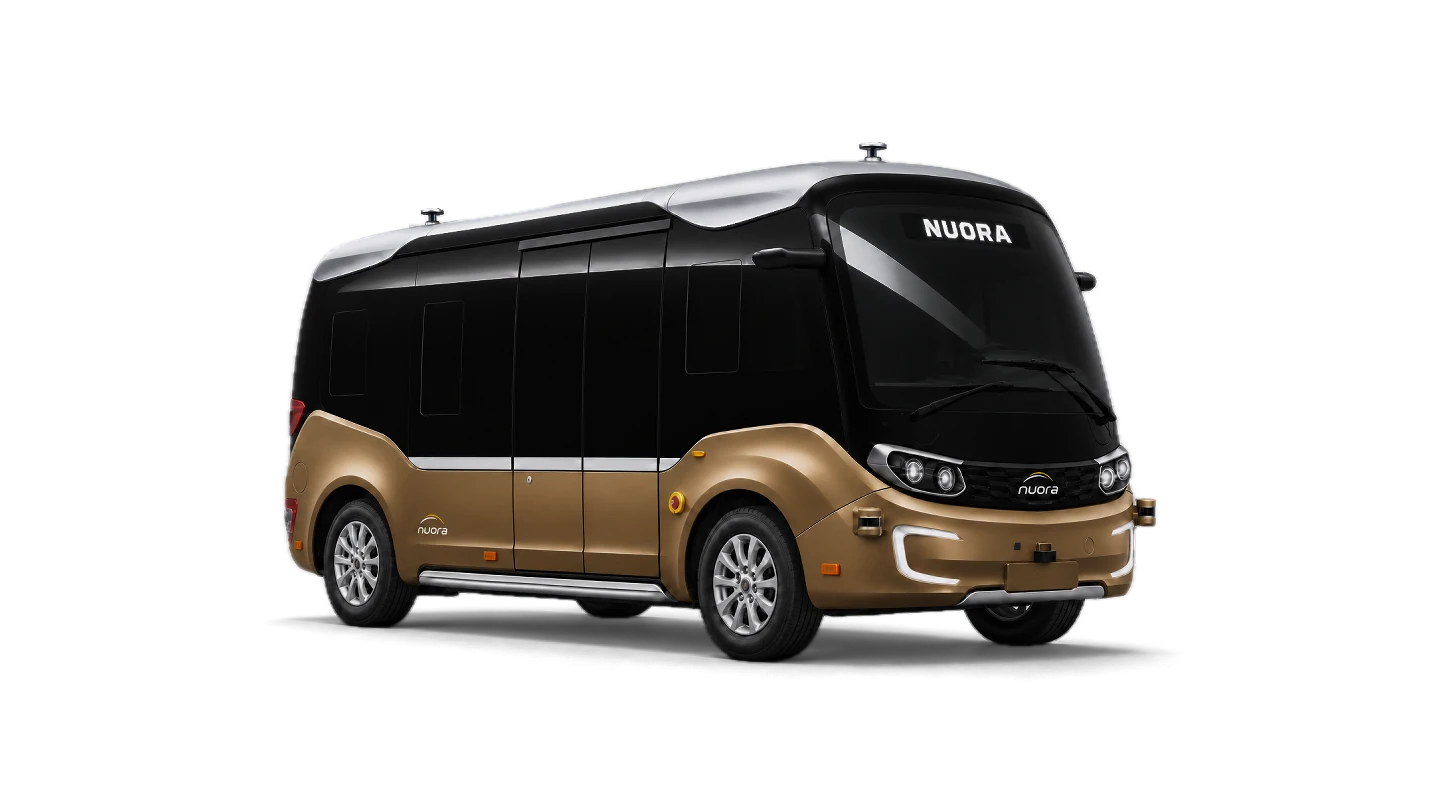
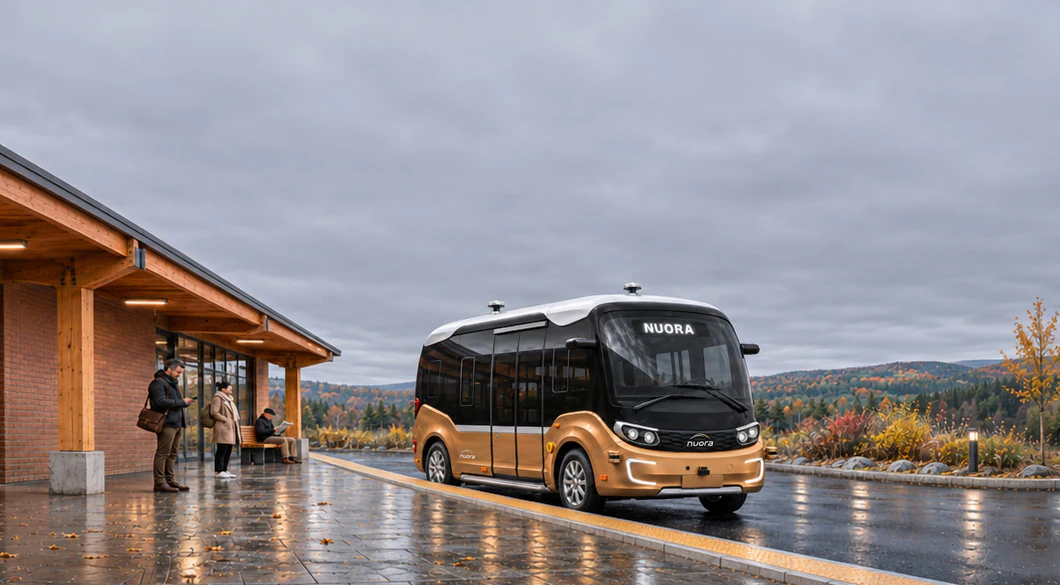
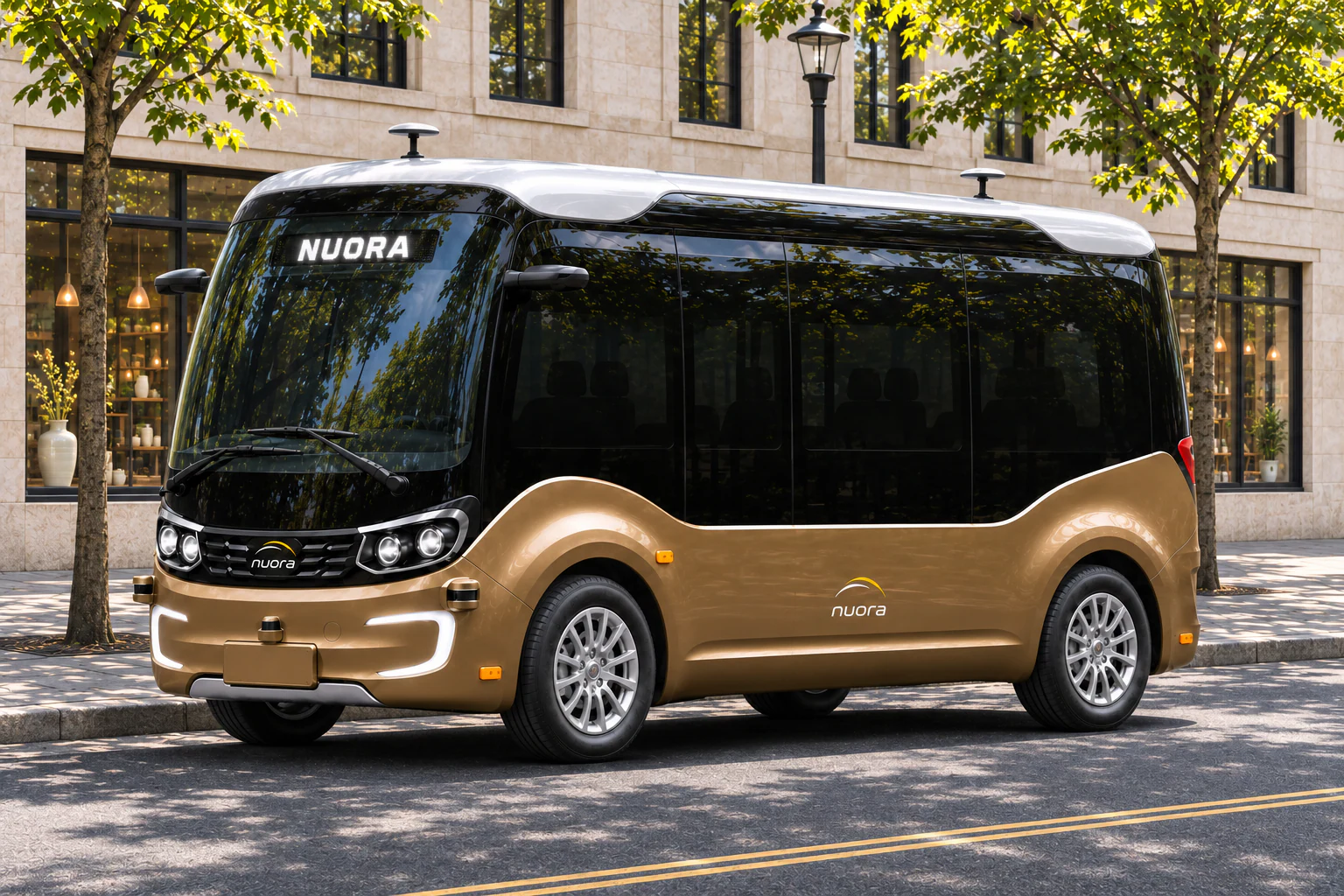
The gold Ora 1 faces the camera on a tree-lined city street, with a white NUORA display above the windshield.

Front view

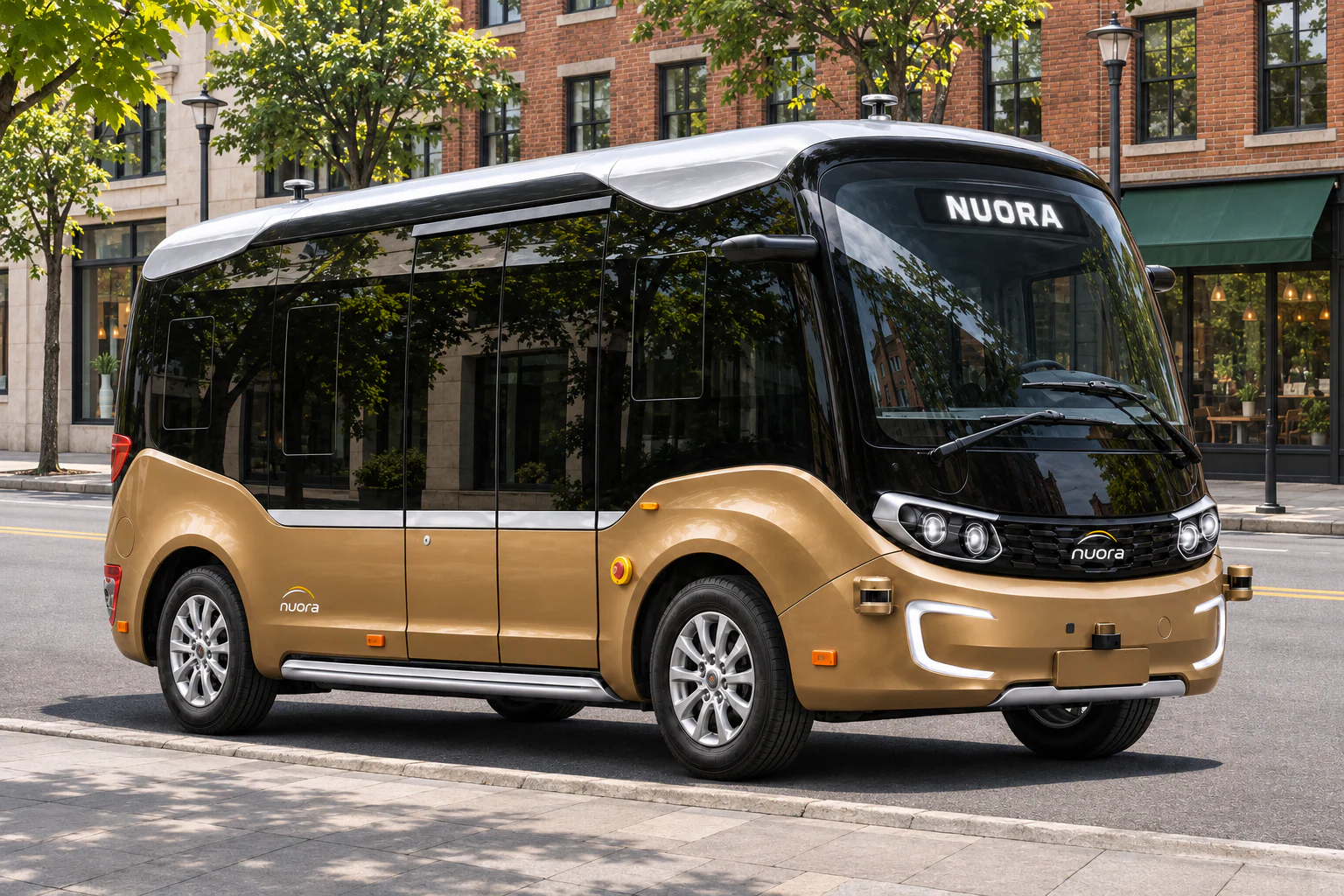
Front three-quarter view showing the centre passenger door and silver step beside the curb.

Front · boarding side

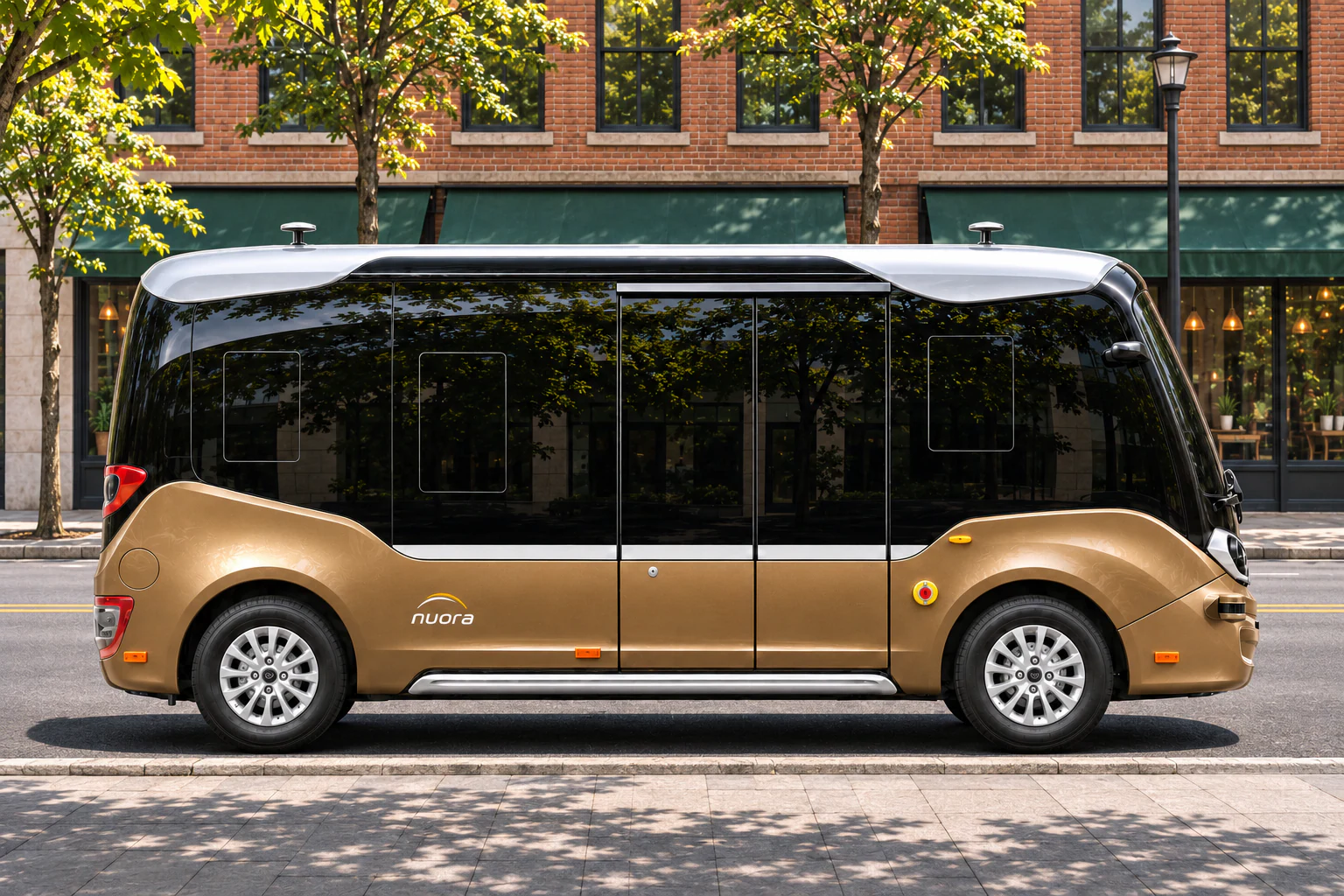
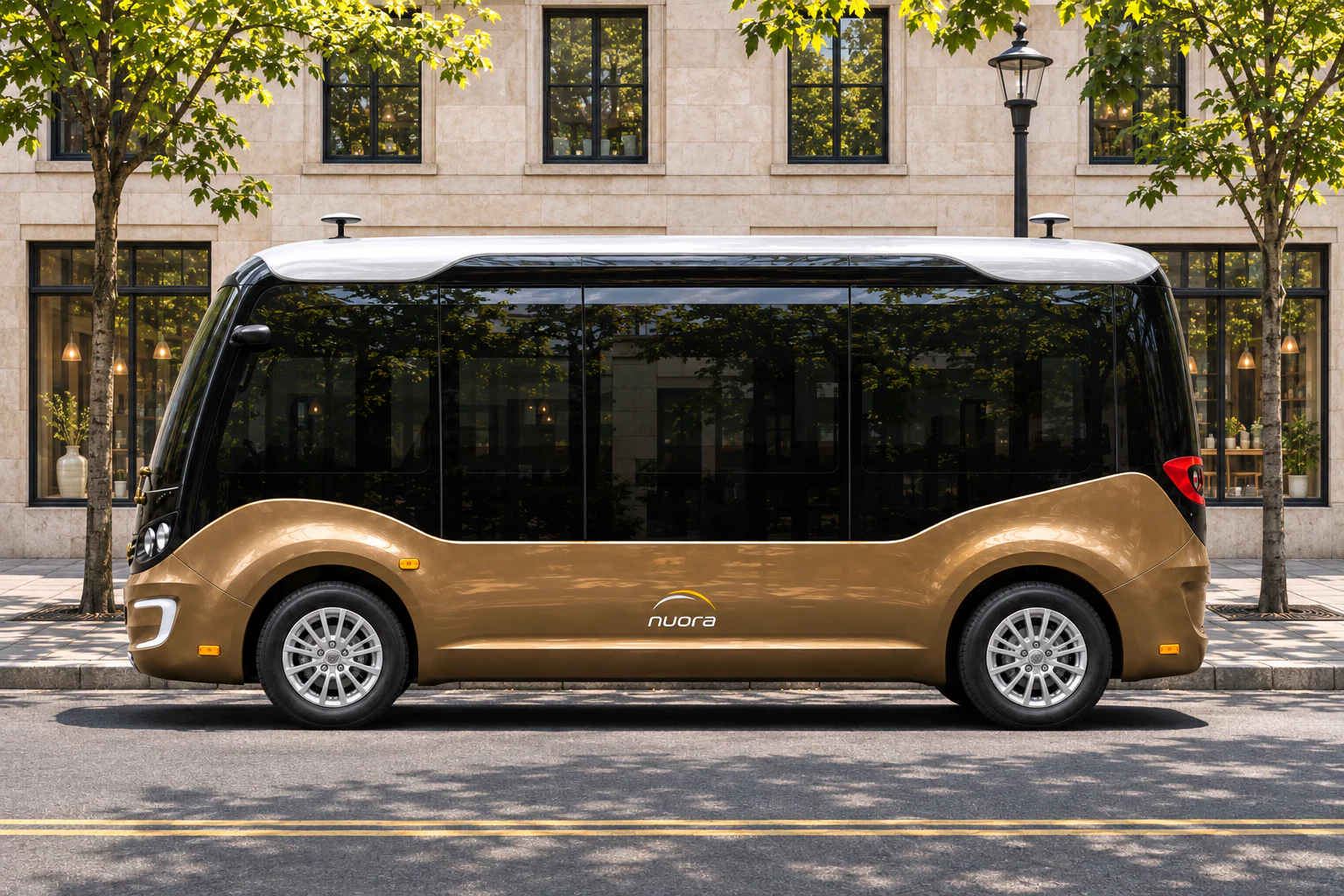
Side profile with the two-leaf passenger door between the wheels.

Boarding side

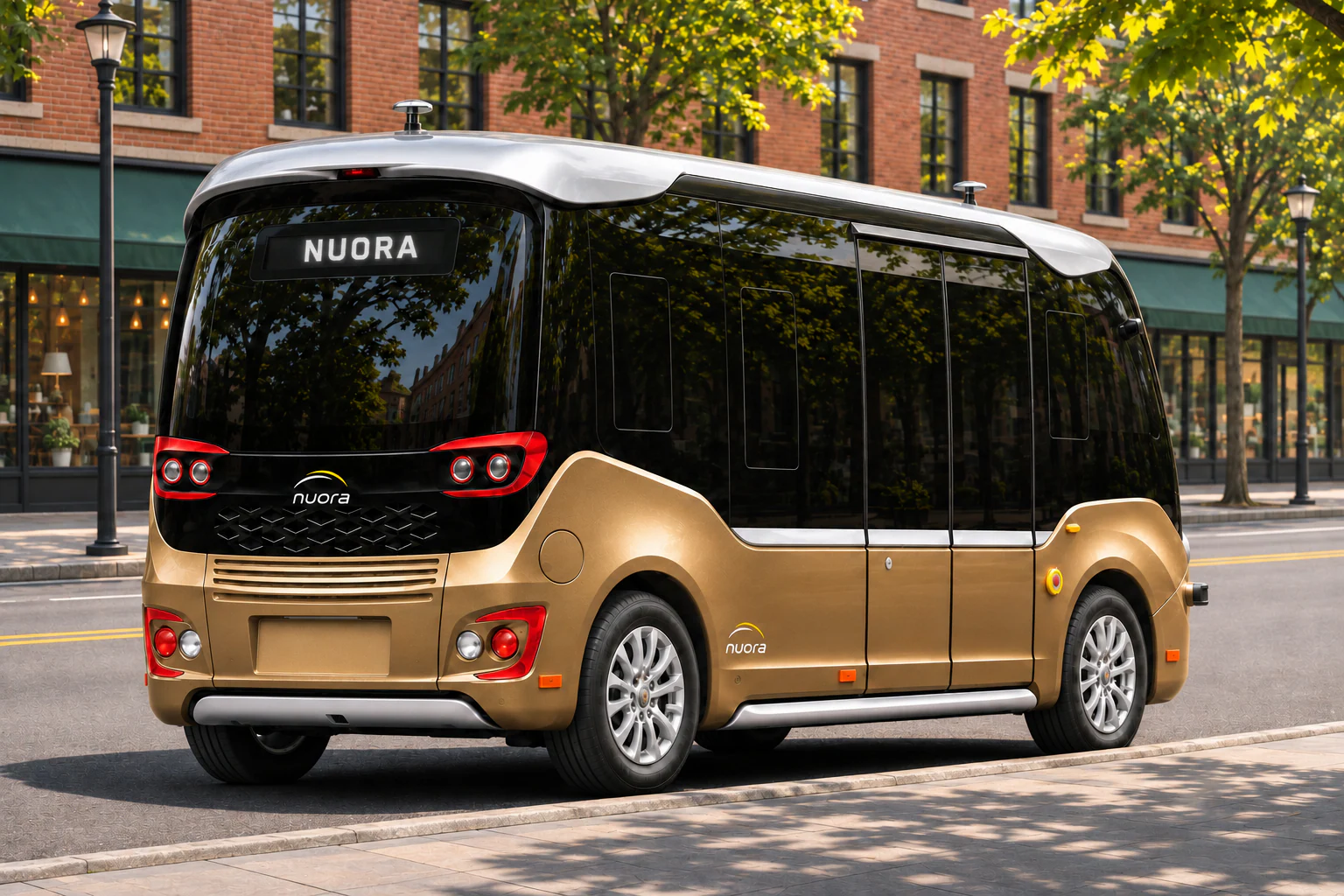
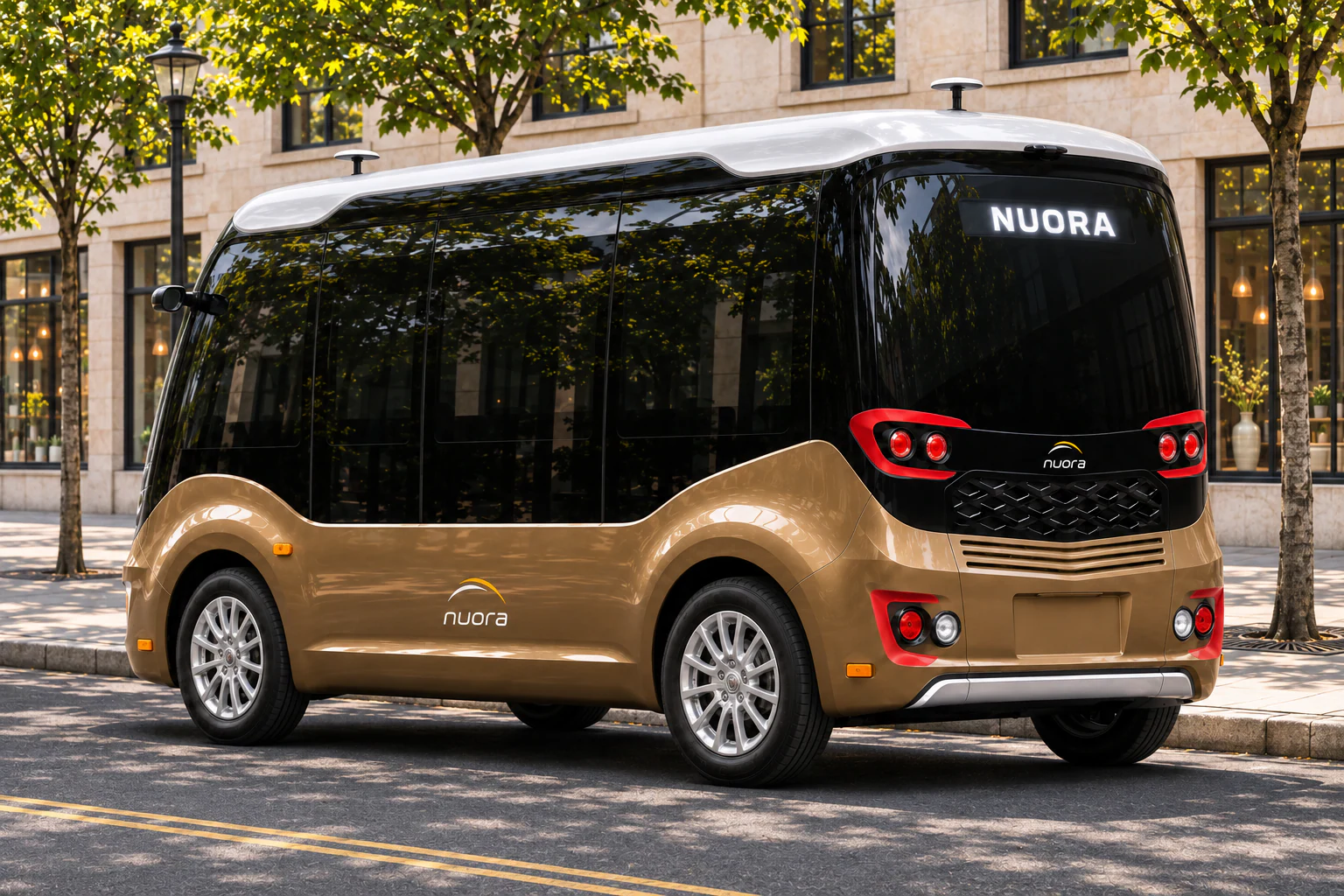
Rear three-quarter view showing the boarding-side step, black glazing and red rear lamps.

Rear · boarding side

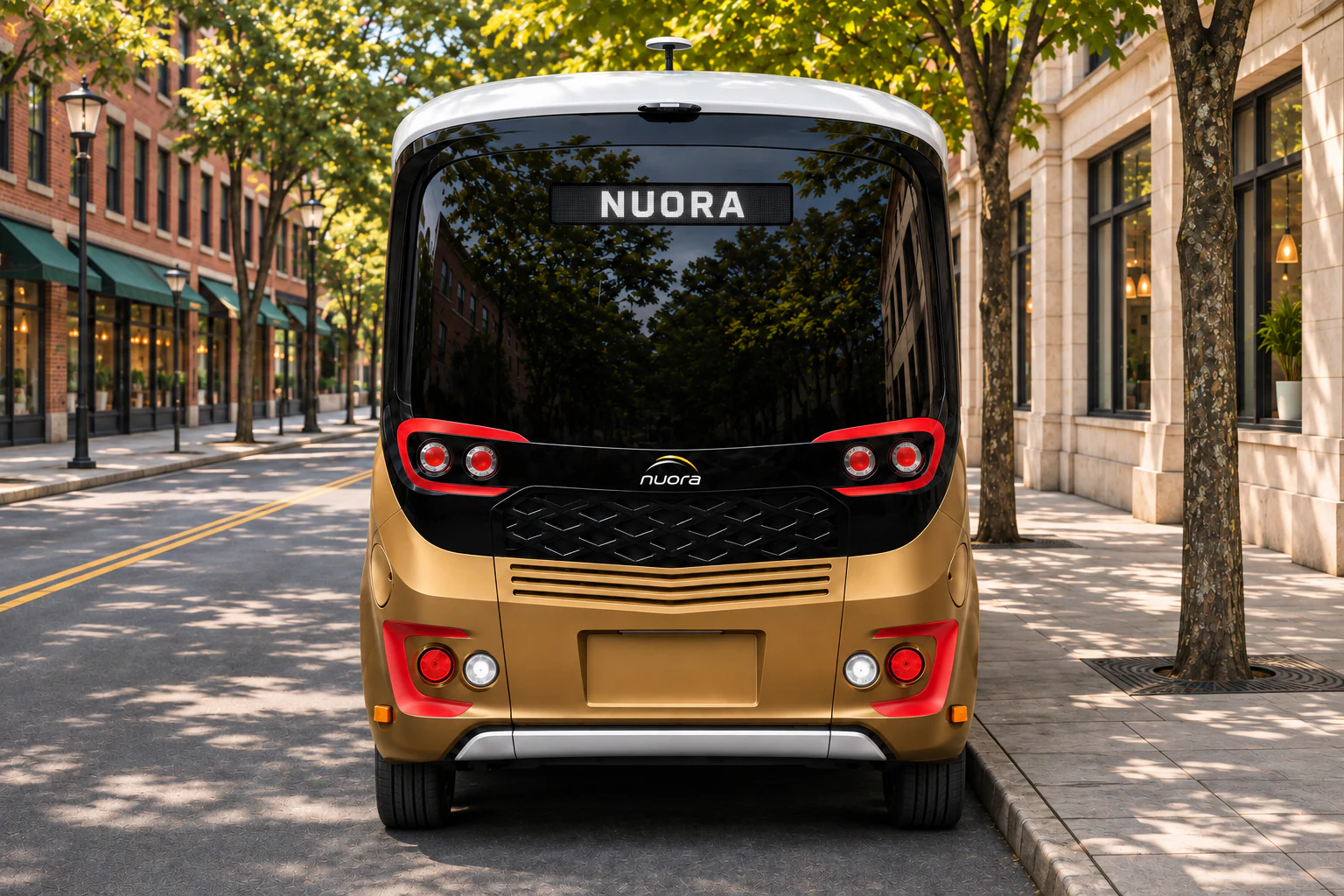
The rear window carries an illuminated white NUORA sign above the paired red lamps.

Rear view

Rear three-quarter view of the continuous gold body panels on the side opposite the entrance.

Rear · opposite side

Side profile opposite the entrance, with a silver roof above the dark window band.

Opposite side

Front three-quarter view showing the opposite side, grille and white NUORA display.

Front · opposite side

INTERIOR DESIGN

View from the front of the cabin along the patterned aisle to the raised rear seats, with black upholstery and gold handrails.

Front to rear

View from the rear along the aisle toward the driver’s seat and upright Nuora display beside the windshield.

Rear to front

The steering wheel faces twin dashboard displays, with an auxiliary touchscreen to the left and physical controls to the right.

Manual driving controls

Nuora Autonomous Ora 1

Vehicle details

Route planning

Autonomous capability
SAE Level 4
Maximum capacity
Up to 24 passengers
Driving range
Up to 150 km
Overall length
6,045 mm
Overall width
2,020 mm
Maximum speed
50 km/h
Autonomous and manual driving

Ora 1 supports SAE Level 4 autonomous driving on permitted roads and in closed or geofenced areas. The driver can switch to manual operation by touching the steering wheel. Local operating permission is specific to the route.

Passenger layout and boarding

The standard 9+1 seating layout carries up to 24 passengers. Alternative layouts have 10 to 14 seats, including a 14-seat version for up to 19 passengers. An electric sliding plug door opens to a clear width of 1.1 m, leading into a fully low-floor cabin.

Electric range and speed

The electric shuttle has a maximum speed of 50 km/h. Road testing demonstrated up to 150 km on a full charge. The battery sits in the chassis beneath the low floor.

Dimensions and vehicle weight

The body measures 6,045 mm long and 2,020 mm wide, with a gross vehicle weight of 5,440 kg. Height options are 2,560, 2,640 and 2,695 mm. A longer 6.2 m version has also been operated.

Sensing and vehicle control

Lidar, millimetre-wave radar, high-dynamic-range cameras and GPS feed the driving system. The autonomous version uses 21 radars and more than a dozen cameras. Sensing, data fusion and motion planning each have redundancy built in.

Nuora Autonomous Ora 1 — Front and boarding side

A low-floor electric shuttle

Ora 1 pairs a streamlined, six-metre body with panoramic side windows. A battery integrated into the chassis makes room for a fully low-floor passenger cabin.

On board

Road and pedestrian recognition

The sensors track pedestrians, identify objects and recognise traffic lights. The driving system uses those inputs to plan its path and avoid obstacles within its operating area.

Manual takeover

The dual-control cab gives the driver access to the steering wheel in autonomous mode. Touching it switches the shuttle to manual driving.

Low-floor boarding

A 1.1 m sliding plug door opens onto a fully low floor. Integrating the battery into the chassis leaves the floor clear through the passenger area.

Onboard passenger information

A 32-inch LCD display provides real-time information on board. Large panoramic side windows give passengers a view of the route.
Connected fleet

5G connectivity links the shuttle to the fleet network. Vehicle-to-vehicle communication supports information sharing between equipped vehicles.

On-demand dispatch

Passengers can request a ride using a smartphone app. Dispatch software analyses demand to plan routes around requested trips.

Where Ora 1 fits

From a campus loop to a station shuttle, see how autonomous driving, low-floor boarding and on-demand dispatch fit different services.

Campus and science park loops

Ora 1 can link a transit stop, laboratories and office buildings on a permitted campus loop. Within the defined operating area, the driving system recognises pedestrians and traffic lights and can stop automatically at designated stops.

A last-mile connection

A 6,045 mm body gives operators a compact shuttle for the connection between a station and nearby destinations. The 1.1 m entrance opens onto a low-floor cabin, and the standard layout accommodates up to 24 passengers.

Service that follows demand

In a residential community or visitor district, passengers can request a ride from their phone. Dispatch software uses the pattern of requests to plan trips, giving operators an option beyond fixed routes and stops.

A driver can take the wheel

A site operator can use autonomous driving inside its permitted operating area and manual driving when a driver needs control. Both modes use the same vehicle, with a switch to manual when the driver touches the wheel.

A clearer journey for passengers

On an airport or business park shuttle, the 32-inch passenger display can show journey information as the bus travels. Panoramic windows let riders see approaching stops and landmarks.

Enquire about this bus
Coming soon
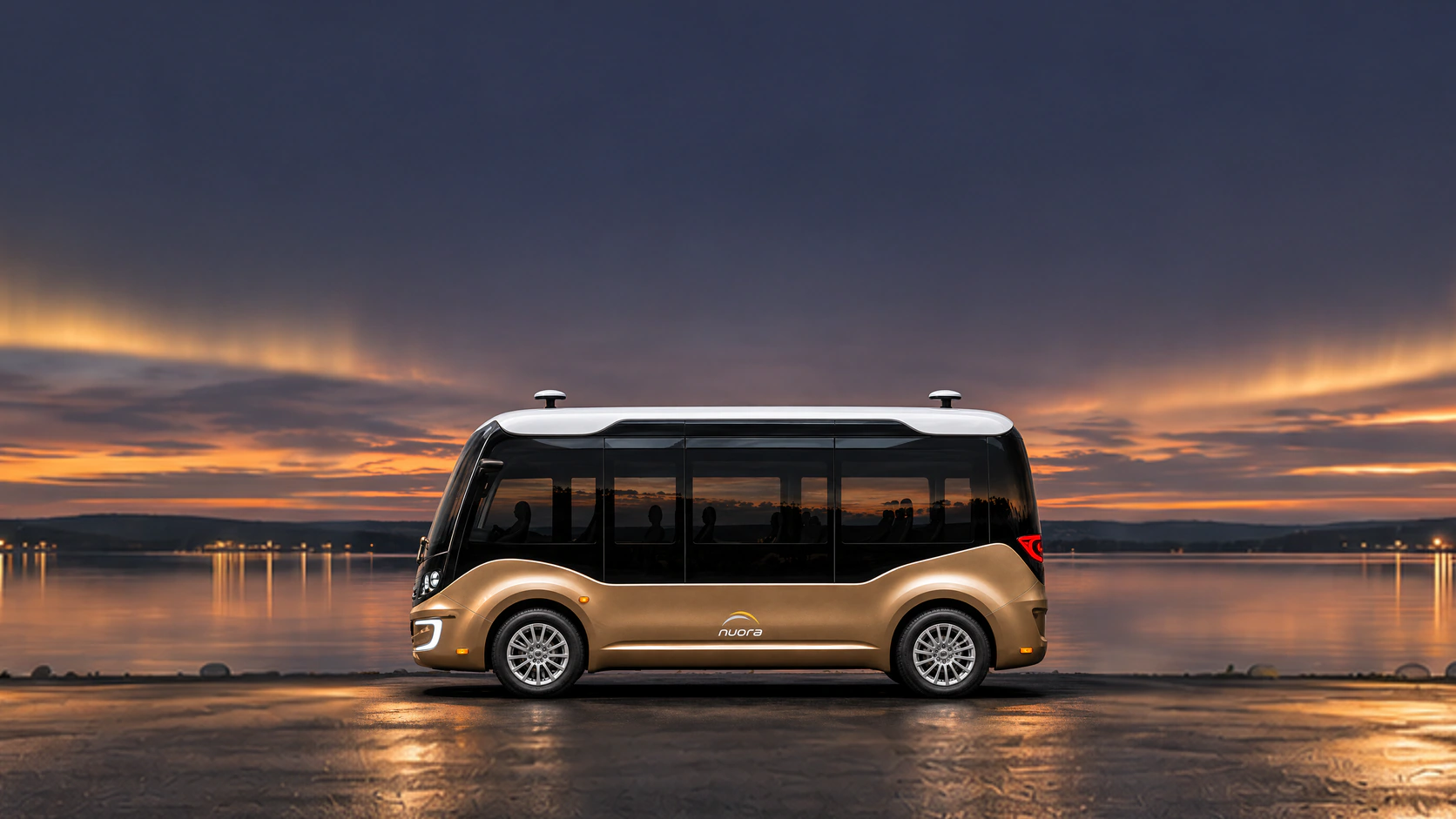
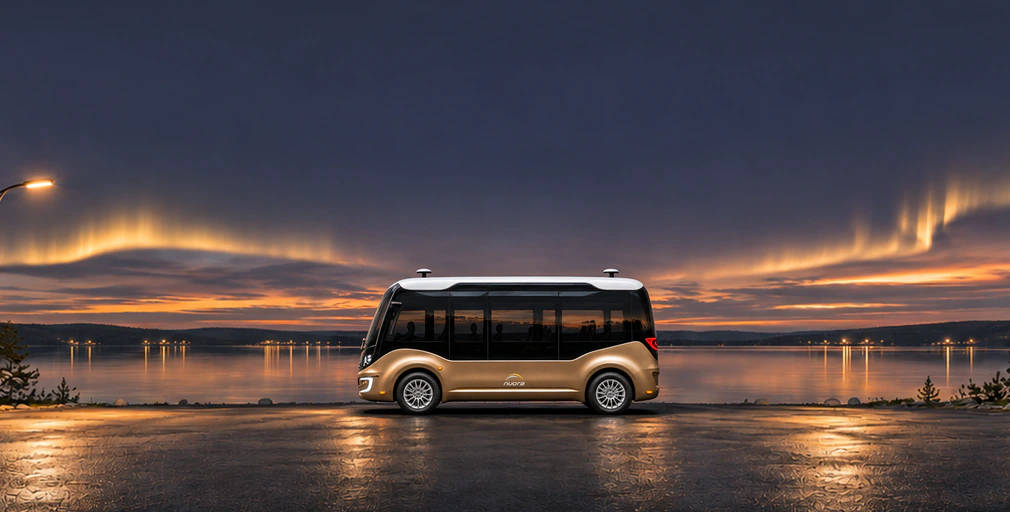
The gold Ora 1 in profile beside a lake, with an aurora above the distant hills.

Nuora Autonomous Ora 1

Talk to Nuora about an autonomous shuttle for your route.